Reviewing the Tumbler Hedgehog Embroidery Design
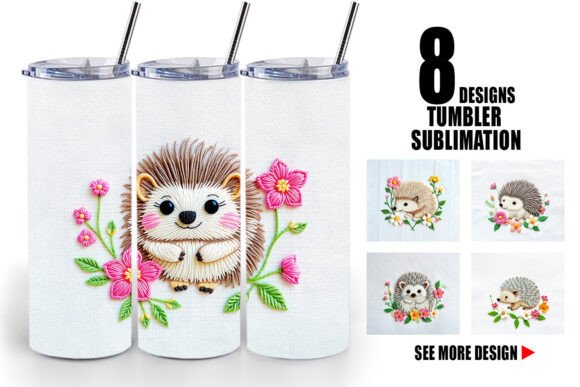
As a designer who spends more time staring at stitch maps than I do sleeping, I have learned to be skeptical of digital assets that promise too much. We often see bundles labeled with confusing terminology, mixing sublimation terms with embroidery needs. Today, I am taking a close, practical look at the Tumbler Hedgehog Embroidery concept. While the source material describes a "Tumbler Sublimation Bundle" with PNG files, my focus here is strictly on how this specific hedgehog motif translates when we move from a flat graphic to a tactile, stitched reality. If you are an Etsy seller, a boutique owner, or a hobbyist looking to elevate your handmade product line, understanding the nuance between a printed image and a stitched design is critical.
First Impressions: Mood and Visual Personality
The immediate appeal of a hedgehog motif lies in its inherent charm. It suggests warmth, nostalgia, and a touch of whimsy. When evaluating the Tumbler Hedgehog Embroidery for real-world application, the first thing I assess is the silhouette. A successful embroidery design must have a strong, recognizable outline. If the details are too fine, they get lost in the fabric texture. This particular design theme leans toward a cozy, woodland aesthetic. It feels right for autumn collections, nursery decor, or rustic-themed branding. The visual personality is soft and approachable, which is exactly what customers look for in a personalized gift. However, because the original description mentions "sublimation" and "PNG files," we must assume that if this were adapted for embroidery, the digitizer would need to carefully convert those smooth gradients into distinct thread colors and stitch types.
Real-World Application: From Concept to Stitch
Let’s imagine a realistic scenario. You run a small shop selling custom baby items. A client requests a set of burp cloths and a receiving blanket featuring a woodland creature. This is where the Tumbler Hedgehog Embroidery concept faces its true test. On a soft, textured cotton flannel, the design needs to breathe. If the stitch density is too high, the fabric will pucker, ruining the premium feel of the finished product.
In my experience, hedgehog designs work exceptionally well on sweatshirt embroidery projects. The thicker fabric of a crewneck sweatshirt can support the weight of the threads, allowing for richer fill stitch work in the body of the hedgehog. For a tote bag design, however, you might need to simplify. A heavy canvas bag requires a bolder approach. If the original graphic has intricate quills or tiny facial features, these might need to be enlarged or simplified using satin stitch borders to maintain clarity. I recently used a similar hedgehog motif on a lined apron for a local bakery. The result was charming, but only because I adjusted the scale to fit a 5x7 hoop perfectly, ensuring the eyes and nose remained distinct without becoming a tangled mess of thread.
Where Caution is Required
Not every surface is friendly to detailed embroidery. If you are considering this design for custom apparel made from thin, stretchy jersey knits, proceed with care. Without proper stabilization, the weight of the embroidery can cause the garment to sag or distort. Similarly, if you are attempting to place this on a curved surface like a cap, the geometry changes. What looks flat on a screen can twist awkwardly on a structured front panel.
Another common pitfall is dark fabric. If the Tumbler Hedgehog Embroidery relies on subtle shading found in the original PNG graphics, those nuances will vanish on black or navy fabric unless you use an underlay or choose high-contrast thread colors. Always test your design on scrap fabric first. Check how the light hits the stitches. Does the hedgehog look flat? Does it pop? These are questions you must answer before committing to a client order.
Technical Considerations for the Serious Crafter
Since the product description references a "Sublimation Bundle" and "Graphics," it is vital to clarify a major distinction for craft business owners. Sublimation prints are raster images (pixels), while embroidery machines require vector-based stitch files (like PES, DST, or JEF). You cannot simply load a PNG into an embroidery machine. If you are purchasing this as a graphic to print, that is one workflow. If you intend to stitch it, you need a properly digitized machine embroidery design.
If you are working with a digitized version of this hedgehog, pay attention to the stitch density. High density creates a plush, raised look but uses more thread and time. Low density is faster but may show the fabric underneath. For a commercial embroidery project where speed matters, a balanced density is key. Also, verify the hoop size requirements. A design that fits a 4x4 hoop is versatile for small items like socks or baby hats, while a larger 6x10 version allows for more detail on pillows or towels.
- Stabilizer Selection: Use cut-away stabilizer for stretchy fabrics and tear-away for stable wovens like cotton tote bags.
- Thread Choice: Polyester threads offer durability for items that will be washed frequently, such as kitchen towels or baby clothes.
- Detail Check: Inspect tiny corners and sharp points in the design. These areas are prone to thread breaks if not digitized with proper tie-offs.
Enhancing Brand Value and Customer Trust
Why does the quality of your embroidery file matter? Because it directly impacts your brand perception. A sloppy stitch-out with loose threads and puckered fabric tells the customer that you do not care about quality. A crisp, clean embroidered patch or direct stitch tells them they are buying something special. The Tumbler Hedgehog Embroidery, when executed well, adds significant perceived value. It transforms a plain item into a heirloom-quality piece.
For digital product sellers who might be offering this as part of a bundle, providing clear previews is essential. Use printable mockup tools to show the design on various backgrounds. Show it on a white mug, a beige linen napkin, and a dark denim jacket. This helps buyers visualize the versatility of the asset. Remember, whether you are selling the design assets themselves or the finished product, transparency about file types and usage rights builds trust. Always confirm licensing before selling finished items or digital products. If the original bundle is for sublimation only, you cannot legally or technically use it for embroidery without proper conversion and rights.
Final Verdict for Makers and Designers
The hedgehog theme is a timeless winner in the crafting world. It appeals to a wide demographic, from new parents to lovers of cottagecore aesthetics. However, the success of the Tumbler Hedgehog Embroidery in your shop depends entirely on execution. Do not rely solely on the preview image. Dive into the technical details. Check the stitch count if available. Review the color stops. Test it on the actual fabric you plan to sell.
If you are an appliqué design fan, consider adapting the hedgehog body as an appliqué piece. This reduces stitch count, saves time, and adds a lovely textural contrast between the fabric patch and the embroidered outlines. This technique is particularly effective for larger items like holiday embroidery pillows or oversized tote bags.
In conclusion, while the source material may originate from a sublimation context, the visual potential of this hedgehog design for embroidery is high—if handled with professional care. Treat it as a serious embroidery project, respect the limitations of your machine and fabric, and you will create pieces that customers cherish. Whether for a small shop product line or a one-off personalized gift, the devil is in the details, and the joy is in the stitching.