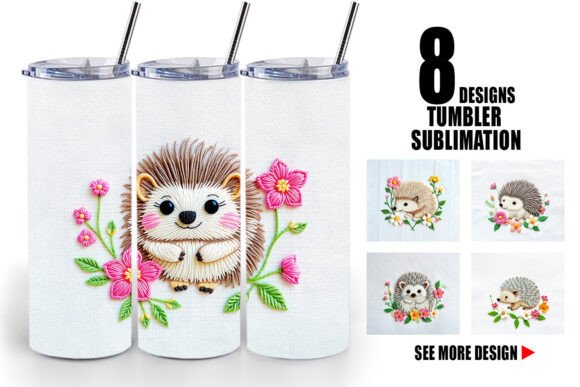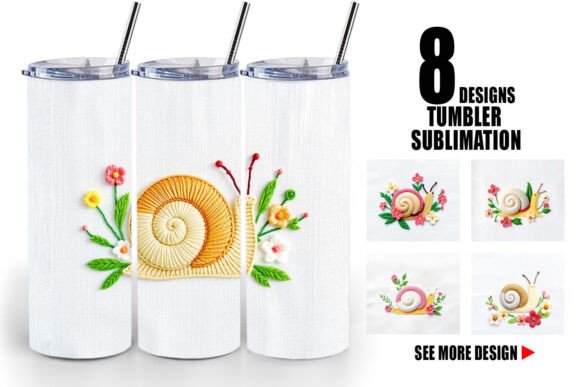
Reviewing the Embroidery Floral Tumbler 20oz Png Wrap
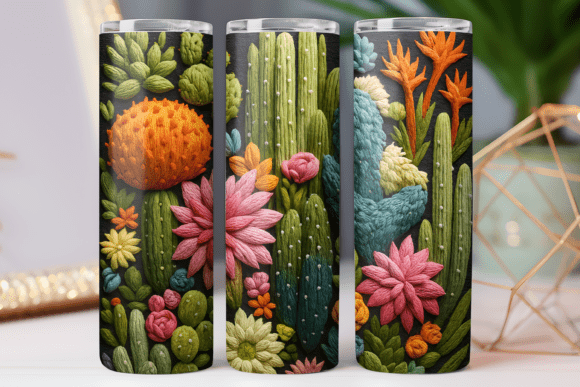
As a designer who spends half my life digitizing patterns and the other half testing them on actual fabric, I have learned to look past the glossy preview images. When I first encountered the Embroidery Floral Tumbler 20oz Png Wrap, my initial reaction was one of cautious curiosity. The visual presentation is undeniably charming, featuring a soft, organic floral arrangement that promises to add a touch of elegance to any project. However, for those of us in the trade, the devil is always in the details. We need to know how these curves translate into thread, how the density sits on cotton versus polyester, and whether this design holds up under the scrutiny of a paying customer.
First Impressions and Visual Personality
The mood created by this design is gentle and inviting. It does not scream for attention with aggressive contrasts or overly complex geometric shapes. Instead, it relies on the natural flow of botanical elements. For an embroidery project, this suggests a reliance on smooth satin stitches for stems and delicate fill stitches for the petals. The layout appears balanced, which is crucial when you are working within the constraints of a specific hoop size. If you are planning to use this for a personalized gift or a boutique item, the aesthetic fits perfectly into the current trend of cottage-core and minimalist handmade goods. It feels less like a generic clip-art addition and more like a thoughtful design asset intended for high-quality presentation.
Real-World Application: Beyond the Screen
Let’s move away from theory and talk about practice. Imagine you are preparing a custom order for a local boutique. They want a line of embroidered tote bags for their spring collection. You load the Embroidery Floral Tumbler 20oz Png Wrap into your software. Here, the distinction between a sublimation graphic and an embroidery file becomes critical. Since this product is described as a digital design for sublimation, using it directly for stitching requires significant adaptation. If you were to digitize this concept for embroidery, you would need to simplify the tiny details. Tiny leaves and intricate petal edges often get lost in translation if the stitch count is too high or the resolution too fine for the needle.
In a real-life scenario, such as creating a sweatshirt embroidery piece, the thickness of the fabric changes everything. A design that looks crisp on a screen might buckle on a fleece hoodie if the stabilizer isn't chosen correctly. For a tote bag design, the canvas is sturdy, allowing for denser stitching. However, if you are attempting this on a thin baby onesie, the tension must be adjusted to prevent puckering. This is where experience matters. You must evaluate whether the floral elements are spaced out enough to allow the fabric to breathe between stitch zones. Crowded designs lead to stiff, uncomfortable finished products, which is a quick way to lose customer trust.
Navigating Technical Constraints
There are specific situations where you should approach this type of floral design with care. First, consider the hoop size. If you are working with a small 4x4 hoop, you may need to split the design or reduce its scale significantly. Reducing scale, however, risks merging small details into a blob of thread. Always check the minimum recommended size before committing to a run. Second, textured fabrics pose a challenge. If you are stitching on a waffle-knit towel or a rough linen, the fine lines of the floral wrap may not sit flat. In these cases, a cut-away stabilizer is non-negotiable to maintain shape integrity.
Dark fabrics present another hurdle. If the original graphic relies on subtle shading, you will need to carefully select your thread colors to ensure visibility. A light pink flower on a navy blue shirt needs a solid underlay to pop. Without proper contrast, the design disappears. Furthermore, curved surfaces like caps require special attention. A large, continuous floral wrap might distort when stitched onto the front panel of a baseball cap due to the curvature and the stiffness of the buckram. For such applications, breaking the design into smaller, manageable sections or choosing a simpler variant is often the smarter play.
Impact on Brand and Customer Perception
Why does this matter for your business? Because the quality of your embroidery directly reflects your brand consistency. An Etsy seller or small shop owner knows that buyers engage with tactile quality. A clean, well-stitched floral motif signals professionalism. It tells the customer that you care about the longevity of the handmade product. Conversely, loose threads, puckered fabric, or unclear details suggest haste and lack of expertise. Using a well-thought-out design like this, properly adapted for embroidery, enhances the perceived value of the item. It transforms a simple t-shirt into a keepsake.
For commercial embroidery projects, reliability is key. If you are producing fifty units for a wedding party, you cannot afford to troubleshoot digitizing errors mid-production. Testing the design on scrap fabric first is not just a suggestion; it is a requirement. Check the stitch density. Is it too heavy for the garment? Does the jump stitch management look clean on the back? These are the questions that separate amateur hobbyists from serious creative entrepreneurs.
Practical Notes for the Designer
Before you integrate this design into your workflow, here are some actionable steps. First, verify the license. Since the product description notes this is a sublimation PNG and not an SVG or native embroidery file, you must confirm if you have the rights to modify and digitize it for commercial sale. Never assume. Second, create black and white mockups. This helps you see the structure of the design without the distraction of color. If the shape doesn't read clearly in monochrome, it won't read well in thread either.
Compare the design on both light and dark backgrounds digitally before stitching. This helps in planning your thread palette. Use the appropriate stabilizer for your fabric type—tear-away for stable woven fabrics and cut-away for knits. Finally, inspect the small details. Are there tiny isolated stitches that might pull out after washing? If so, merge them or remove them. A durable finished product is one that survives the wash cycle looking as good as it did on day one.
In conclusion, while the Embroidery Floral Tumbler 20oz Png Wrap offers a beautiful starting point for visual inspiration, its successful translation into embroidery depends entirely on your technical execution. Treat it as a reference for mood and layout, but apply your professional judgment to adapt it for the physical realities of thread and fabric. By doing so, you elevate your craft and deliver superior value to your clients.