Reviewing the Taco Embroidery Design for Real Projects
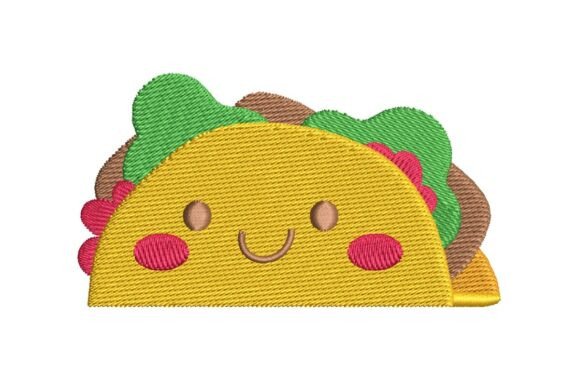
As a designer who spends more time staring at stitch maps than actual thread, I have learned that not every cute concept translates well into a finished product. When I first pulled up the Taco Embroidery file on my screen, my initial reaction was one of cautious optimism. The kawaii aesthetic is saturated in the current market, especially among Etsy sellers and small shop owners looking for quick wins. However, this specific smiling taco design offers a layout that feels surprisingly balanced for its size. It does not rely on excessive detail to convey personality, which is often the downfall of food-themed machine embroidery design options.
First Impressions and Visual Personality
The immediate mood of this design is playful and approachable. The smiling face gives it a character-driven appeal, moving it beyond a simple static image of food. For those of us creating handmade products, this emotional connection is vital. A customer is more likely to pause on a listing if the design feels like it has a voice. The shape is compact, avoiding long, wandering lines that can cause registration issues on home machines. The visual personality suggests warmth and humor, making it an ideal candidate for projects that aim to bring a smile, such as personalized gifts or children’s items.
In terms of layout, the elements are grouped tightly. This is crucial for maintaining integrity during stitching. Loose elements tend to shift or pull unevenly, but here, the shell, filling, and face appear to work as a cohesive unit. This cohesion reduces the risk of thread breaks or puckering, provided the correct stabilizer is used. The design avoids overly thin lines that might disappear on textured fabrics, a common pitfall in smaller embroidery file selections.
Real-World Application: The Tote Bag Test
To truly evaluate any design, you must imagine it on a physical object. I recently considered this Taco Embroidery for a custom canvas tote bag project. Canvas is a sturdy fabric, but it has a distinct weave that can swallow fine details. I simulated the design on a mockup to check how the thread colors would pop against natural cotton. The contrast held up well. The bold outlines typical of kawaii styles help the design stand out even on busy backgrounds.
This design is not limited to bags. It shines equally well as sweatshirt embroidery. On fleece or cotton blends, the soft curves of the taco shell complement the casual nature of the garment. I can easily see this being a hit for Cinco de Mayo projects or as a year-round staple for food lovers. For small business merchandise, versatility is key. A design that works on both a structured cap and a soft baby onesie increases its value to the creator. This particular file seems to bridge that gap effectively, offering enough simplicity for stretchy fabrics while retaining enough charm for flat surfaces like pillow covers.
Navigating Fabric and Hoop Constraints
While the design is robust, it is not without its limitations. Any experienced embroiderer knows that hoop size dictates placement. If you are working with a 4x4 hoop, this design likely fits comfortably, leaving room for stabilization margins. However, placing it on curved surfaces like caps requires careful attention. The width of the taco means it should be centered precisely to avoid distortion around the seam.
Fabric texture also plays a significant role. On terrycloth towels, the finer details of the smile might get lost. In such cases, increasing the stitch density slightly or using a thicker thread weight could enhance visibility. Conversely, on thin, delicate fabrics like silk or lightweight rayon, the density must be monitored to prevent puckering. I always recommend testing on scrap fabric first. This allows you to adjust tension and check if the fill stitch areas are too dense for your specific material.
Dark fabrics present another challenge. If the design relies on light-colored threads for the taco shell, ensure you use an underlay that covers the background fabric adequately. Without proper underlay, the dark fabric can peek through, ruining the clean look of the kawaii style. This is where a good applique design technique might come in handy if the file supports it, though this appears to be a standard stitched design. Always check the file details to see if applique variants are included.
Commercial Viability and Brand Consistency
For craft business owners, the question is not just whether it looks good, but whether it sells. The food category is competitive. To stand out, your embroidery project needs to look professional. This design contributes to brand consistency by offering a clean, recognizable icon. It does not look cluttered or amateurish, which builds customer trust. When buyers see crisp edges and well-placed elements, they perceive higher value.
Using this in a printable mockup for your online store is straightforward because the shape is distinct. It photographs well, which is essential for digital product previews. Whether you are selling the digital embroidery file itself or finished items like embroidered patches, the visual clarity helps in marketing. It is easy to visualize this on a variety of design assets, from stickers to apparel tags.
However, commercial use requires diligence. Before listing items on Etsy or at craft fairs, confirm the licensing terms. Some designers allow unlimited commercial use, while others require an extended license for high-volume production. Never assume. Check the documentation accompanying the Taco Embroidery file to ensure you are compliant. This protects your small shop product line from legal issues down the road.
Technical Notes for the Stitcher
- Test on scraps: Always run a test stitch-out on the same fabric type you intend to use for the final product.
- Check contrast: Ensure your thread colors provide enough distinction between the taco shell, the filling, and the face.
- Stabilizer selection: Use a cut-away stabilizer for stretchy fabrics like t-shirts and a tear-away for stable woven fabrics like tote bags.
- Review stitch types: Look for satin stitches on the edges for a polished look and fill stitches for the body to ensure coverage.
- Mockup verification: Test the design in black and white to ensure the shapes are recognizable without color reliance.
In conclusion, this Taco Embroidery design is a solid addition to any designer’s library. It balances cuteness with technical practicality. It is not overly complex, making it accessible for beginners, yet it has enough character to satisfy seasoned apparel decorators. By paying attention to fabric choice, stabilization, and placement, you can create high-quality custom apparel and gifts that resonate with customers. It is a reminder that in Embroidery, simplicity often yields the most charming and durable results.