Review: Bat with Lollipop Embroidery Design
As a designer who has spent countless hours hooping fabric, testing tension, and troubleshooting thread breaks, I approach every new machine embroidery design with a mix of curiosity and skepticism. We have all been there: you download a cute graphic, only to find it turns into a tangled mess of bird’s nests on your actual garment. That is why I took a close look at the Bat with Lollipop Embroidery design to see if it holds up under the needle. This isn’t just about whether it looks good on a screen; it is about how it performs in the real world of craft businesses and handmade shops.
First Impressions: Balancing Cute and Creepy
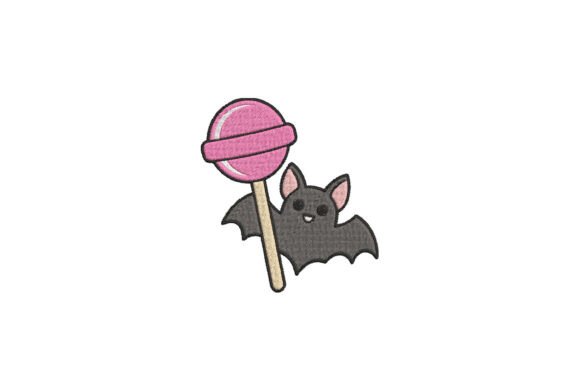
The immediate appeal of this design lies in its thematic balance. Halloween motifs often lean too hard into horror or become so sanitized they lose their edge. This bat, holding a lollipop, strikes a playful "cute-but-creepy" vibe that is incredibly versatile. Visually, the silhouette is clean. The wings are distinct, and the addition of the lollipop adds a focal point that draws the eye without cluttering the composition. For an embroidery project, this clarity is crucial. Complex, overly detailed designs often suffer when scaled down, losing definition in the stitch work. Here, the layout suggests a thoughtful approach to stitch density and pathing, which is essential for maintaining shape integrity.
I imagine this design working beautifully for a variety of clients. It is not just for spooky season decor; it has a whimsical quality that fits well in nursery settings or for toddler apparel. The mood is light-hearted, making it safe for parents who want festive items for their children without the intense imagery associated with traditional horror themes.
Real-World Application: From Onesies to Tote Bags
To truly evaluate a design, you have to visualize it on actual products. I mentally placed this digital embroidery file on several common items to test its versatility. First, consider baby embroidery. The description notes it is perfect for baby onesies and toddler tees. On a small garment, the smaller sizes (like Size 1 at 3.8 inches) would sit perfectly on the chest or sleeve. The rounded edges of the bat and the lollipop suggest that the design likely utilizes a mix of satin stitch for borders and fill stitch for the body, which provides a soft texture against sensitive skin. However, always check the backing and use a soft cut-away stabilizer to ensure comfort.
Moving to adult apparel, this design shines as sweatshirt embroidery. A dark heather grey or black hoodie provides the perfect canvas for the bat, allowing the colors of the lollipop to pop. For Etsy sellers and small shop product creators, this is a high-value item. It transforms a basic blank into a seasonal bestseller. I also see strong potential for tote bag design applications. Stitched onto a canvas tote, it becomes a functional piece of holiday embroidery art that customers can use for trick-or-treating or grocery runs long after October ends.
Another excellent application is the embroidered patch. Because the design has a defined outer edge, it would hoop cleanly for a merrowed or satin-bordered patch. These patches are huge in the current market for customizing jackets and backpacks. If you are creating design assets for a broader audience, offering this as a patch-ready file could significantly boost your sales.
Technical Considerations and Stitching Performance
While the aesthetic is strong, the technical execution is where a design lives or dies. The availability of five sizes is a significant advantage. It allows you to scale the design from a tiny accent on a baby hat to a larger statement piece on a pillow cover. However, scaling embroidery is not always linear. When you shrink a design, the stitch density effectively increases relative to the area. If you plan to use the smallest size on a thin fabric like a onesie, you must be cautious. High density on thin material can cause puckering. I strongly recommend testing on scrap fabric first, using a tear-away stabilizer for woven fabrics or a cut-away for knits.
Conversely, if you expand the design to its largest size, watch for long stitches in the wing areas. Long satin stitches can snag easily. If the design uses running stitch details for the eyes or lollipop swirls, ensure they are not too sparse, or they may get lost in the fabric texture. Fabric texture plays a huge role here. On a fluffy towel or a textured linen, fine details might disappear. In such cases, increasing the contrast in your thread colors can help maintain visibility.
One specific area to inspect is the connection points between the bat and the lollipop stick. In digital previews, these often look seamless, but in reality, they are potential weak points for thread breaks or gaps. Before committing to a final finished product, run a test stitch-out. Check if the jump stitches are minimized and if the trim commands are logical. A well-digitized design will minimize manual trimming, saving you time in production.
Commercial Viability for Craft Businesses
For commercial embroidery professionals and craft business owners, time is money. A design that stitches out cleanly and quickly is invaluable. The Bat with Lollipop Embroidery seems optimized for speed without sacrificing quality, assuming the digitizer prioritized efficient pathing. This makes it ideal for bulk orders, such as class parties or boutique holiday collections.
When creating printable mockup images for your online store, remember that lighting and angle matter. Show the design on both light and dark fabrics to demonstrate its versatility. Customers often hesitate to buy if they cannot visualize the contrast. By showing the bat on a white tee and a black tote, you build trust and reduce return rates. Furthermore, ensure you understand the licensing terms. Most designers allow you to sell physical handmade product items made with their files, but reselling the embroidery file itself is usually prohibited. Always confirm this before listing items on platforms like Etsy or at local craft fairs.
Final Verdict and Designer Notes
In my assessment, the Bat with Lollipop Embroidery is a solid addition to any seasonal library. It bridges the gap between childish fun and stylish minimalism. It is not just a novelty; it is a usable, professional-grade asset for those who understand how to work with embroidery constraints.
Before you start stitching, keep these practical notes in mind:
- Test on Scrap: Always stitch a test piece on the same fabric type you intend to use for the final product.
- Check Stabilizer: Match your stabilizer to your fabric. Knits need cut-away; wovens can often use tear-away.
- Thread Contrast: Choose thread colors that stand out against your fabric. A black bat on a navy shirt might get lost unless you use a contrasting border.
- Hoop Size: Confirm the hoop size required for the specific size variant you choose. Do not assume a 4x4 hoop will fit a 5-inch design.
- Licensing: Read the license agreement carefully to ensure you are compliant for commercial sales of finished goods.
Ultimately, this design offers a charming, professional look that can elevate your custom apparel and gift offerings. With proper preparation and attention to detail, it will likely become a staple in your autumn catalog.