Review: Digital Paper Macaw Embroidery for Craft Fairs
As an embroidery designer who has spent countless weekends standing behind booth tables, I have learned that not every design translates well from screen to stitch. When I first encountered the Digital Paper Macaw Embroidery, my immediate question was not just about aesthetics, but about viability. Does this design hold up under the harsh fluorescent lights of a convention center? Does it catch the eye of a passerby scanning a crowded table? After reviewing the assets and considering the practicalities of production, I am ready to share how this collection fits into the workflow of serious Etsy sellers and handmade shop owners.
First Impressions: Bold Artistry Meets Market Appeal
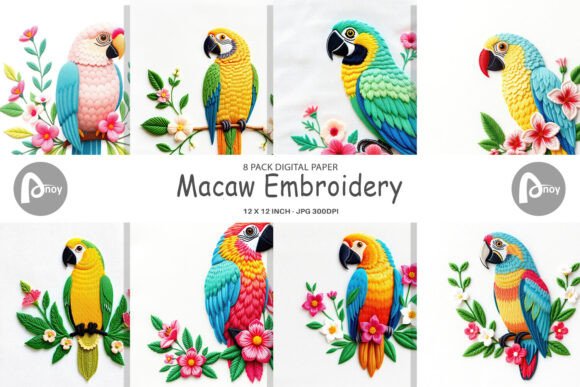
The initial vibe of the Digital Paper Macaw Embroidery is undeniably bold and vibrant. It does not whisper; it shouts. In a market saturated with minimal line art and subtle farmhouse motifs, this design stands out as a statement piece. The description mentions an "exquisite 8 Pack Digital Paper set," which suggests a richness in texture and color variation. For a craft fair seller, this is crucial. You need items that stop traffic. The macaw, with its inherent tropical flair and complex plumage, offers a level of visual interest that draws customers in from three aisles away.
This is not a shy design. It feels modern, decorative, and premium. It bridges the gap between traditional Illustrations and functional Graphics, making it versatile for various applications. However, its complexity means it requires thoughtful placement. It is not a background element; it is the star of the show.
Product Applications: Where This Design Shines
To maximize sales, you must match the design to the right substrate. Here is how I see the Digital Paper Macaw Embroidery performing across different handmade product categories:
- Tote Bags and Market Bags: This is arguably the best application. A large, centered macaw on a canvas tote creates an instant tote bag design that feels artistic and wearable. The flat surface allows the intricate details to remain clear, and the sturdy fabric supports the weight of the stitching without puckering.
- Aprons and Kitchen Textiles: For apron embroidery, consider placing the design on the bib or lower corner. On tea towel embroidery, caution is needed. Towels have a loose weave that can distort fine details. If the design has dense areas, it may pull the fabric. Test extensively here.
- Embroidered Patches: If the file scales down well, this could make a stunning embroidered patch. Patches are high-margin small shop product items. However, ensure the tiny feather details do not become a mush of thread when reduced in size.
- Pillow Covers and Home Decor: A macaw adds a pop of color to neutral living rooms. Using this on pillow covers allows for larger hoop sizes, letting the design breathe and showcasing the gradient effects of the thread work.
Production Realities: Stitch Density and Fabric Choice
From a technical standpoint, working with a detailed bird design requires attention to stitch density. Macaws have intricate feather patterns. If the digital embroidery file is too dense, you risk creating a stiff, cardboard-like feel on soft fabrics. Conversely, if it is too sparse, the underlying fabric might show through, ruining the vibrancy.
I strongly advise checking the thread colors recommended in the file. Macaws require a wide spectrum of blues, reds, yellows, and greens. Ensure your machine can handle frequent color changes efficiently, or simplify the palette for faster production during busy fair seasons. Also, consider the hoop size. This design likely demands at least a 5x7 or 6x10 hoop to maintain clarity. Trying to cram it into a 4x4 hoop will likely result in lost detail and frustrated customers who cannot appreciate the artistry.
Fabric texture plays a massive role here. Smooth cottons, linens, and canvas work best. Avoid highly textured fabrics like heavy wool or terry cloth for this specific design, as the loops can interfere with the crispness of the feathers. Always use a cut-away stabilizer for garments that will be washed frequently, ensuring the design remains stable over time.
Selling Strategy: Visual Appeal and Customer Engagement
Why does this design sell? It evokes emotion. It feels exotic and lively. When setting up your booth, use the Digital Paper Macaw Embroidery as your anchor piece. Place an embroidered tote or a framed hoop sample at eye level. The bright colors contrast beautifully with neutral booth displays, drawing the eye immediately.
For online listings, this design photographs exceptionally well. The natural gradients in the bird’s plumage create depth in photos, reducing the need for heavy editing. Create a printable mockup or a high-quality photo of the finished item on a model or in a lifestyle setting. Show the scale. Customers need to see that this is a substantial, high-quality piece of art, not a small, afterthought logo.
As an Etsy seller, you can leverage the "commercial embroidery" aspect by offering custom items. Let customers choose their background fabric color while keeping the vibrant macaw consistent. This maintains brand consistency while offering personalization, a key driver in handmade sales.
Practical Designer Notes for Success
Before you commit to batch production, follow these steps to ensure quality control:
- Test on Scrap Fabric: Never run a new design on final product fabric without a test. Check for thread breaks and tension issues.
- Check Thread Contrast: Ensure the thread colors stand out against your chosen fabric. A dark blue macaw on black fabric will vanish.
- Review Spacing and Density: Look for areas where stitches overlap excessively. Trim jump threads carefully to keep the back clean, especially for items like scarves where the back might be visible.
- Confirm Licensing: The description mentions an "8 Pack Digital Paper set" and "design assets." Verify if this includes the actual embroidery files or just graphic references. If it is a graphic, you will need to digitize it yourself. If it is a pre-digitized machine embroidery design, confirm the commercial license terms. Can you sell finished products? Are there quantity limits? Always know your rights before selling.
- Create Real Mockups: Do not rely solely on digital previews. Stitch one real sample. Photograph it. Use this image for your marketing. Authenticity sells.
Final Verdict
The Digital Paper Macaw Embroidery is a strong contender for craft fair staples. It is bold, visually engaging, and versatile enough to work on bags, home decor, and apparel. While it requires careful handling regarding stitch density and fabric choice, the payoff is a high-value finished product that commands attention. For designers looking to add a splash of tropical elegance to their lineup, this design offers the artistic excellence needed to supercharge creative endeavors. Just remember to respect the technical requirements of the stitch file, and you will have a best-seller on your hands.